Showing posts with label Urban Design. Show all posts

February 6, 2015

You can learn a lot from a shopping center.

These are a few shots from Riverside Plaza in Riverside, CA. This small stretch of the Plaza is an example of how cities should build neighborhoods.  (The street could be narrower though.) Plenty of public space for people to sit and eat or just linger. The single ownership makes it easier to maintain and police these quasi public spaces than an public sidewalk, but the same sort of amenities could easily be provided on city sidewalks and paid for and maintain by a business improvement district.


It's unfortunate they didn't go all the way and better connect this shopping center to the streets around it. There's a mid century shopping district right across the street that could benefit from the connection. Oddly, they placed the traffic signal north of the street that could have easily connected with Riverside Plaza and made it easy for pedestrian to cross directly into that shopping center.
 

The intersection of Sunnyside Drive and Riverside Plaza is shown below. 

January 22, 2015

Supermarkets and large chain stores in an urban context

The images below are of grocery stores and a sporting goods store on Wilshire Boulevard in West Los Angeles and Santa Monica. The Ralphs is in LA and the other three are in Santa Monica. Each of these buildings presents itself to the public realm differently. The three Santa Monica examples, Whole Foods, Bristol Farms, and Big 5, have varying degrees of transparency from the sidewalk. My assumption is that Santa Monica requires this. Bristol Farms has a few windows and provides a sign directing customers to the entrance behind the building. Big 5 Sporting Goods at least has an entrance on the street. The Whole Foods is the best example of how to do a large format chain store that emphasizes connection to the sidewalk. The primary entrance faces Wilshire and they've placed patio dining and their florist department at the sidewalk. Excellent job. Ad kudos to the planner and residents who likely fought for this.

The Ralph's grocery store in LA is an example of how not  to do it. No entrance on the street. Not even windows. Ok, there are windows. They've got them covered with images of food, but when those images were not there the windows looked into a nothing space with blank walls. The Ralphs and Bristol Farms stores say to the many customers on foot that they would prefer they arrive by car. They say, walking along the driveway and enter from the back. The Whole Foods example proves it can be done well. It's a shame these busineses don't take advantage of the dense population nearby. Many of whom walk, or would walk, to the store if it were more hospitable to people on foot.  (See the final image below from Google maps.)


January 4, 2015

Decent Urban Form

You might not like the color. You might not like the architecture and you might not like the chain stores, but this is a pretty good project. 


This commercial development on Wilshire Boulevard in Los Angeles has a Ross Dress for Less, CVS Pharmacy, and several chain restaurants. Nothing to get too excited about and no "game changing" tenants. The positives of the project are its height and the placement of the building at the sidewalk and the fact that all the stores have entrances that face the street. I can take or leave the architecture. I'm sure there's lots to criticize, but at least the facade is broken up a little and it doesn't look like one massive building (which it is). You can imagine how different this project would look were it built in a traditional suburban style behind a sea of asphalt parking.

 
The entrance to the parking is aligned with the cross street so although it's not a real street it is placed in a location that drivers and pedestrians would expect cars to be entering and exiting.  

This is the project looking east. There are awnings and patio dining. My biggest complaint is the lack of shade trees.

August 18, 2014

Downtown Pomona (Post 1 of 3)

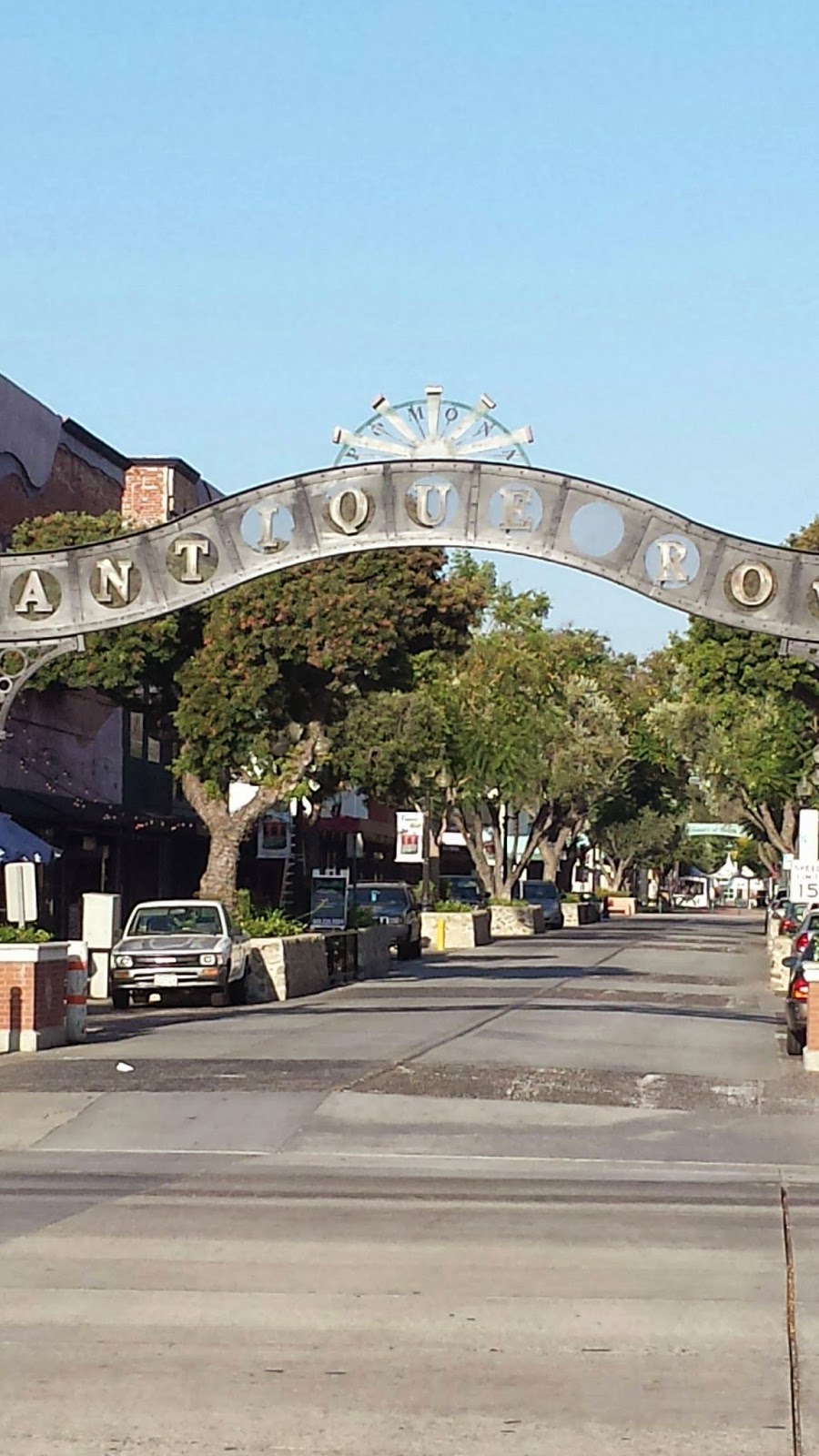
Downtown Pomona has all the basic elements of "new urbanism" which, as I've mentioned in a previous post, is really just old urbanism rediscovered. Downtown Pomona, like many original downtowns in Southern California's "suburbs" provides a case study in how to redesign and retrofit the sprawl that surrounds it. Like many American cities in the 1960s Pomona pedestrianized one of their downtown streets (Second Street) in an attempt to compete with suburban malls. And like most other pedestrian malls, it failed. A couple decades later Pomona, like most of the other cities, reopened Second Street to vehicular traffic. One end of the street is called the Arts Colony and the other is Antique Row. Second Street seems to be the heart of downtown and you can see the great potential in the many old buildings to form the basis of a full fledged revival.

  Welcome to downtown Pomona! Sorta...

 Arts Colony entry

Arts Colony entry later in the evening. 

Second Street. On-street parking, tree-lined, historic buildings built to the sidewalk, and patio dining. 

 
Second Street later in the evening. 

 The other end of Second Street is Antique Row, which I wish they would drop because it sounds lame. They should consider a name change. "Second Street East"or something like that. Notice that although they've reintroduced vehicular traffic to the street, there are still driveways that signify to visitors that this is a shopping center rather than part an urban setting.

Metrolink Station provides connection to Union Station in downtown Los Angeles. One of the challenges for downtown Pomona is that this is also a freight route so there is a god deal of train noise. I suspect this might be one of the reasons that the residential development is practically non existent.


More on downtown Pomona in the next two posts.

July 29, 2014

Good Main Street Urban Design in Downtown Burbank

There are many great urban design elements in just this one little section of downtown Burbank.


Nice wide sidewalk, street trees, benches for sitting, narrowed street at a mid block crossing, pergola that calls out the paseo to the parking in the rear. (See the picture below.) The location of the office building on this frontage is unfortunate. Offices are no longer permitted on the ground floor along San Fernando Boulevard in downtown. The other corner of this building at the end of the block has a good restaurant with lots of patio dining so it's not a complete disaster. (Notice the ribbon of bricks. Typical of downtown redevelopment in the past, but Nate Hood of Strong Towns will be happy to know that I have observed workers systematically filling in grout and maintaining the investment rather than letting it decay.)


This paseo is one of a half dozen in downtown Burbank. It makes San Fernando easily accessible from the parking in the rear and it is also a perfect place for a mid block crossing. This paseo is also a great opportunity to inject some excitement and visual interest into downtown. 


Mid block crossing that narrows the street which slows vehicles and makes the crossing shorter and safer for pedestrians. The street trees are a simple row with a large canopy that makes this the favorite downtown block for many people.
 
The design elements in these photos are repeated throughout downtown Burbank and make it a highly trafficked shopping and entertainment destination in the eastern San Fernando Valley. Some cities have successful spaces like this, but they refuse to implement similar improvements in other parts of their cities. They seem to think it's just fine for the charming little downtown district, but the real money is made elsewhere. The reality is that shopping districts like this generally are more profitable per square foot than the larger big box properties many cities pursue. I'm not sure why more cities don't aggressively encourage the growth of their traditional downtowns.

July 24, 2014

Simple Urbanism

The building is simple and plain, but it's placed right at the sidewalk and integrates well into the public realm. Four floors of residential above. Simple urbanism. Nothing fancy. Just put the mixed-use building in the right place on the property.  The queen palms are nice accent trees that help define the outdoor room, but they don't provide shade which is important on the north side of the street.  The shade in the colonnade depends on the time of day. (These pictures were taken around 9 AM.) It would make a great place for some outdoor dining without intruding on the sidewalk.

July 17, 2014

Luxuriously wide sidewalks.

This is a luxuriously wide sidewalk. The trees will grow to filter the sunlight. The City of Burbank set a good example with this sidewalk. Note the bike lanes as well. A little piece of good urban design. I would love a mid block crosswalk right about where the red brick building begins. 

UPDATE 7/24/14: I've been thinking about this post and I realized I hadn't noted what was lacking on this block. On street parking would make pedestrians feel a little safer, but there's no room in the existing right of way Also, the walls and windows don't provide anything interesting for people to look at as they walk, nor a reason to walk on this block unless they have business with the city.
 

June 11, 2014

Does Family Dollar really need all this parking?

The zoning code probably says so, but the reality is that parking codes are usually outdated and based on poor assumptions. I walked past again on Saturday afternoon and there were even fewer cars and I observed six different people walking home from the store rather than driving. This property is on a corner and kills the otherwise pleasant walkability of the neighborhood. Nothing to look at as you walk by. Not even some softening with decent landscaping. Just barren asphalt. Can you imagine what that experience must be like in the dead of August? 

The developer chose to highlight the abundant free parking rather than take advantage of the prominent corner location by placing the building at the street where it can be seen and easily accessed by pedestrians. In the developer's defense, it's possible the zoning code REQUIRES this.

Developments like this are deadly to the urbanism and contribute to making neighborhoods places that are not worth caring about.


Related

May 21, 2014

"There is nothing about our cities that is inevitable or unchangeable."

It amazes me how often people assume that the built environment, the way their cities look and function, is purely the result of "market forces" and that those pesky planners are just trying to force people to live differently. The reality is that many of the laws related to land use and housing are geared toward compelling one type of built environment and limiting another and thereby excluding genuine choice for people. 
You could argue that we live in a free market country. That all of our decisions are based on what people want - that Conway is sprawled because the people want the city to be sprawled, and that Conway is automobile dependent because people want to drive. 
That is a bunch of baloney. 

May 19, 2014

Critiquing the Critics

I generally roll my eyes when the biggest criticism people have of new subdivisions is that all the houses look the same. Kevin makes a great point about this sort of criticism and urges one critic to have a little perspective.

This is an incredibly important point to make. If the biggest criticism you can make of a subdivision is that it is new, "cookie cutter," or that the trees are small, you are missing the real issue. I think it is important to look at the over all built environment surrounding the new development. The vast majority of new subdivisions lack the urban design elements that make a place attractive and livable in the long term, but that doesn't mean they can't be fixed.

July 23, 2013

Better Uses For Alleys And Driveways

Look how simple it was to transform this space. Tables, chairs, umbrellas. A mostly unusable alley/driveway (Note the sign on the right.)  becomes an extension of the restaurant. This was later in the evening on a weekday. I'll have to go back during the weekend dinner hour to see if this "works." It sure seems like a great opportunity to bring a little life to an otherwise quiet block. (The other side of the street is usually active because of a bakery cafe with outdoor tables and chairs.) It could be an even more interesting space with lights or some other elements strung over the tables between the buildings.